
Abejas del Moncayo, winners of the 2025 Bardos Project: when beekeeping becomes a way to protect the land
Some projects win you over from the very beginning with their simplicity and authenticity. That’s exactly what happened with Abejas del Moncayo, a beekeeping initiative based in the heart of the Moncayo Natural Park, led by Lucía Ibáñez and Natalia Laínez. This year, they’ve been named winners of the Bardos Project 2025—an especially meaningful edition, with over one hundred applications from women transforming rural areas through innovation, sustainability, and vision for the future.
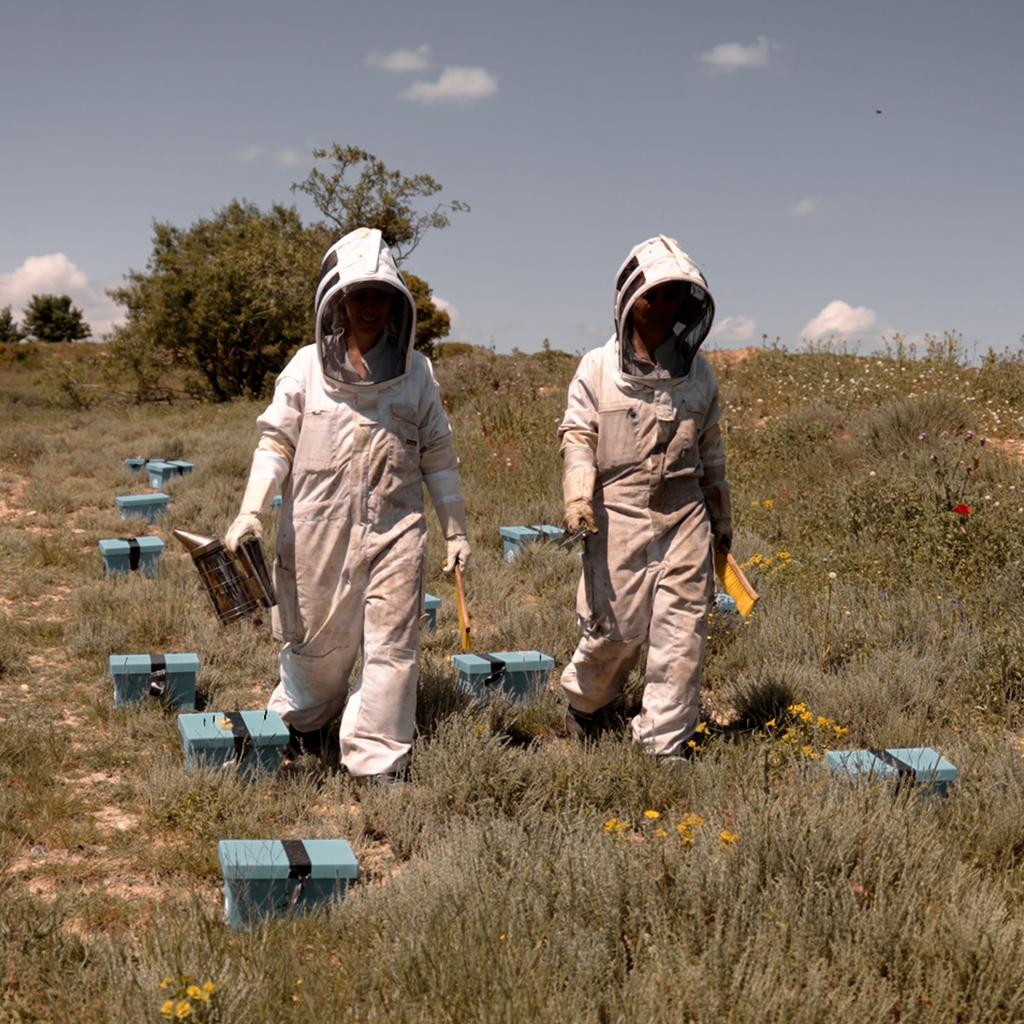
Lucía and Natalia work with the Iberian black bee (Apis mellifera iberiensis), a native subspecies essential to the biodiversity of our ecosystems. But their work goes far beyond honey production: they focus on breeding and genetic selection of queens, provide populated hives and swarms, and are now taking the next step by creating a training center at their own facilities. As they put it, “sharing knowledge is also a way of protecting the land.”
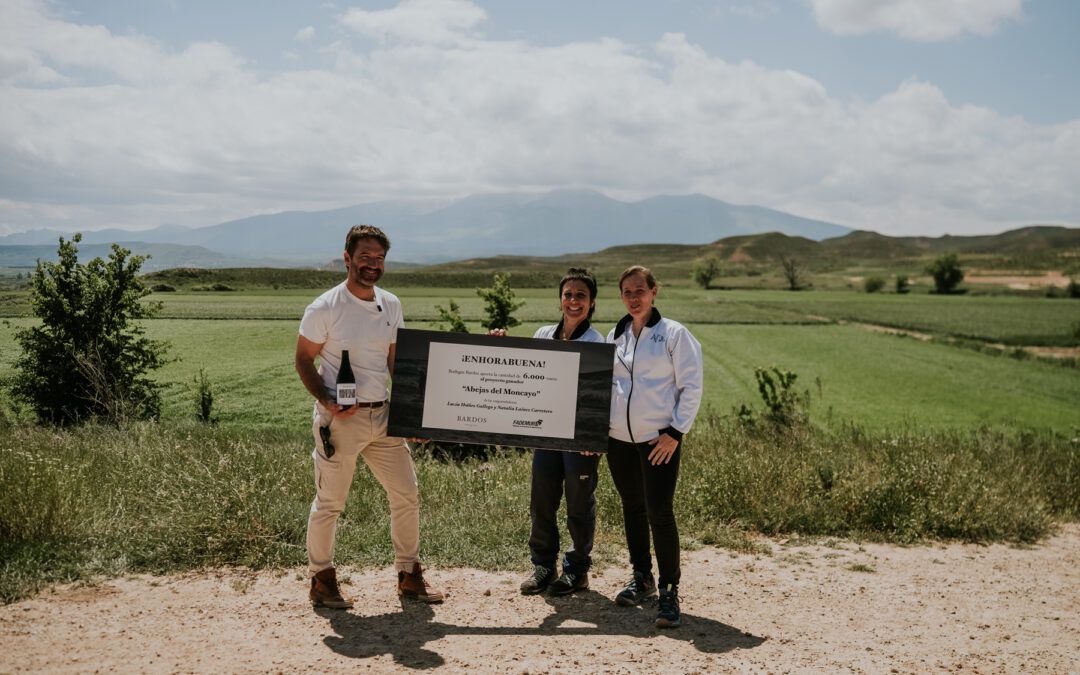
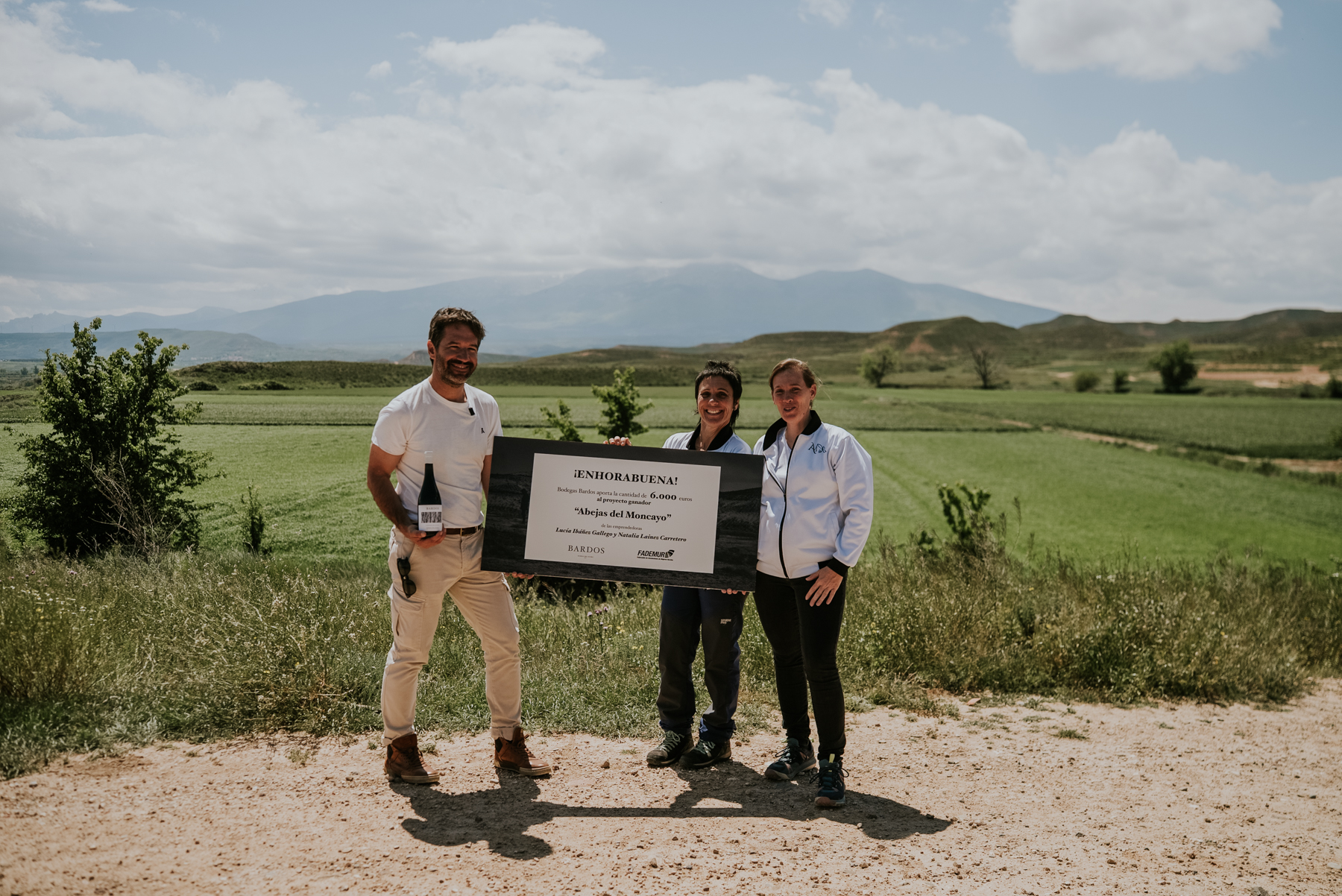
The €6,000 prize was awarded in their hometown of Talamantes (Zaragoza), where we spent an inspiring day with them and the FADEMUR team. We got to see their hives, hear their story, and learn how their vision of responsible beekeeping is helping to preserve the natural environment and keep rural life alive. “Life in the countryside isn’t always easy, but there’s a unique sense of peace and connection that comes with it,” said our founder, Richi Arambarri, during the visit.
At Bodega Bardos, we created the Bardos Project with a clear mission: to give back to the land that gives us so much. And we do that by supporting the crucial role of rural women—true agents of change who are reimagining local economies from the ground up. In previous editions, we’ve honored a self-sufficient cheese dairy, an organic luffa cultivation project, and a sustainable goat farm. This year, the bees take center stage.
To all the bold women who applied and shared your work with us: thank you. And to Lucía and Natalia—thank you for reminding us that protecting biodiversity is also a way of building a better future.